 Crypto Daddy
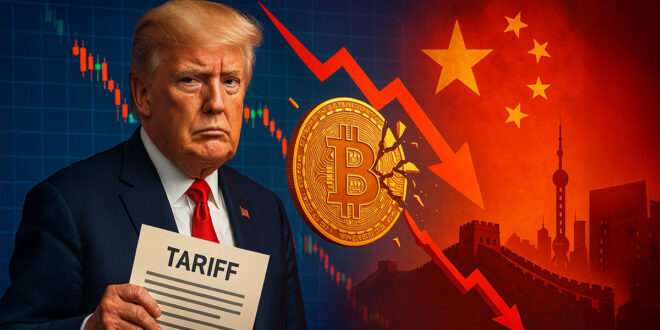
As President Donald Trump’s February 1 tariff deadline approaches, markets are once again trapped in a familiar game of political brinkmanship. The announcement of tariffs targeting eight European nations over Greenland-related tensions has already rattled risk assets — but history suggests the threat may not fully materialize.
An analysis of prior Trump-era tariff deadlines with fixed start dates shows a clear pattern: in 86% of cases, some form of retreat occurred, ranging from delays and exemptions to outright reversals. Crucially, most of these off-ramps emerged either before implementation or within days of the deadline.
This statistical backdrop places traders in a narrow decision window — and positions Bitcoin as the first asset likely to price the outcome.

Markets React Before Policy Does
Crypto markets wasted no time responding. Within 24 hours of the announcement, more than $875 million in leveraged positions were liquidated, with long positions accounting for the overwhelming majority of losses. Bitcoin briefly slid toward the low-$90,000 region, as uncertainty triggered forced deleveraging across major exchanges.
Trump’s statement, posted on Truth Social on January 17, outlined 10% tariffs starting February 1, escalating to 25% by June, unless a deal was reached. Despite the severity of the language, the absence of an executive order and the delayed timeline mirror previous episodes that ultimately ended in compromise.
Why Bitcoin Matters Here
Unlike traditional markets, Bitcoin trades continuously. This makes it uniquely sensitive to political tone shifts during periods when equities are closed or liquidity is thin.
As the deadline nears, any shift in language toward negotiations, exemptions, or postponement could trigger an immediate repricing across crypto markets. Historically, these relief moves tend to hit altcoins harder, as defensive positioning unwinds rapidly.
Conversely, silence or escalation would likely see Bitcoin absorb risk first, acting as a leading indicator for broader market sentiment.
The Final 72 Hours
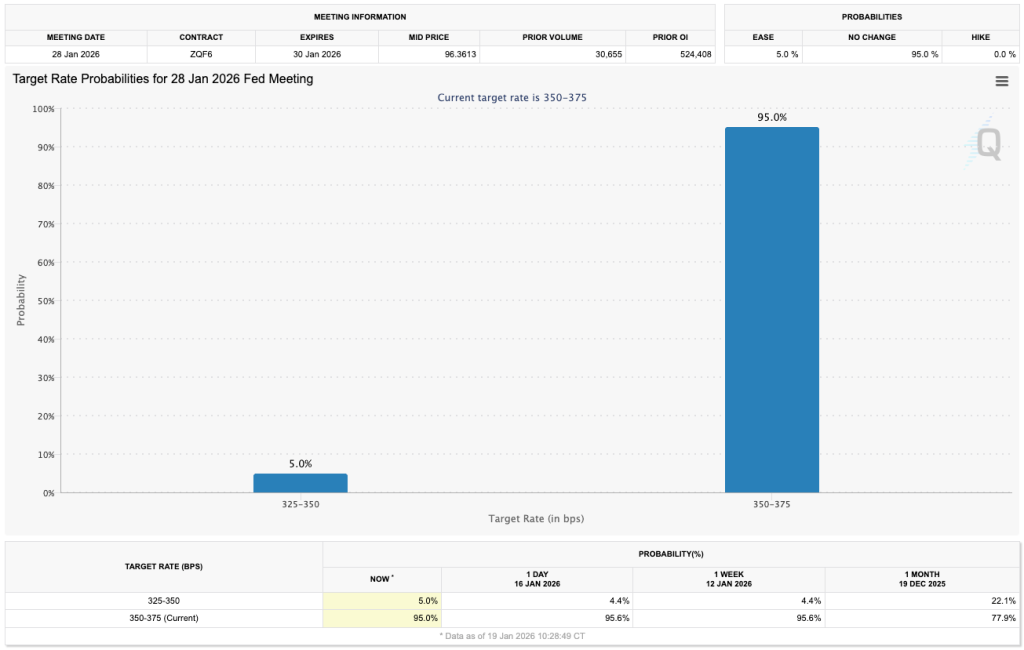
The most critical period begins roughly three days before February 1. If no diplomatic off-ramp appears during that window, markets may begin treating tariffs as credible rather than rhetorical.
European leaders have already pushed back publicly, signaling resistance rather than compliance. This political friction increases volatility — but also raises the probability of a last-minute retreat, consistent with prior trade standoffs.
For traders, the takeaway is simple: watch Bitcoin, not press releases. The market will react faster than policymakers speak.